
A Designer’s Perspective on the Real Future of Advanced Air Mobility
Across the world, the race to build the future of flight has begun. Electric Vertical Takeoff and Landing (eVTOL) aircraft promise to redefine how we move between cities, across regions, and eventually—within urban centers. But while aircraft manufacturers compete on range, noise, and autonomy, there’s a parallel mistake unfolding on the ground: architectural excess disguised as innovation.
Everywhere we look, renderings of futuristic “vertiports” emerge—glass towers, sculpted concrete forms, vast atriums, and lavish waiting lounges that could easily belong to five-star terminals. They may look impressive, but they represent the wrong direction for a passenger service that must be accessible, affordable, and ubiquitous to succeed.
The future of Advanced Air Mobility (AAM) will not be won by the prettiest renderings—it will be won by smart, modular, and human-centric design that brings aviation to the people, not the other way around. Infrastructure should serve the passenger travel expectations before the builder prestige.
Why Over-Designed Vertiports Will Doom the Industry
The economics are simple. When each vertiport costs $10 million or more to build, the model collapses under its own weight. The industry needs networks, not monuments. High-cost, bespoke facilities create isolated “islands of innovation,” unable to scale or deliver real public value.
AAM’s success depends on density and accessibility. If we can’t build hundreds—eventually thousands—of operational nodes quickly and affordably, the promise of on-demand air mobility evaporates.
Designing multimillion-dollar vertiports guarantees failure because:
- They cannot scale. Few cities will fund or permit dozens of expensive structures for unproven demand.
- They break the MaaS model. Advanced Air Mobility is not about luxury terminals—it’s about integration and time saving efficiency.
- They slow adoption. Complex facilities require long approval and building timelines, specialized construction, and higher risk—all incompatible with the agility needed in this emerging market.
- Their cost kills the AAM economic model
A Smarter Path: Vertiportthat Bring the “Airport” to the People
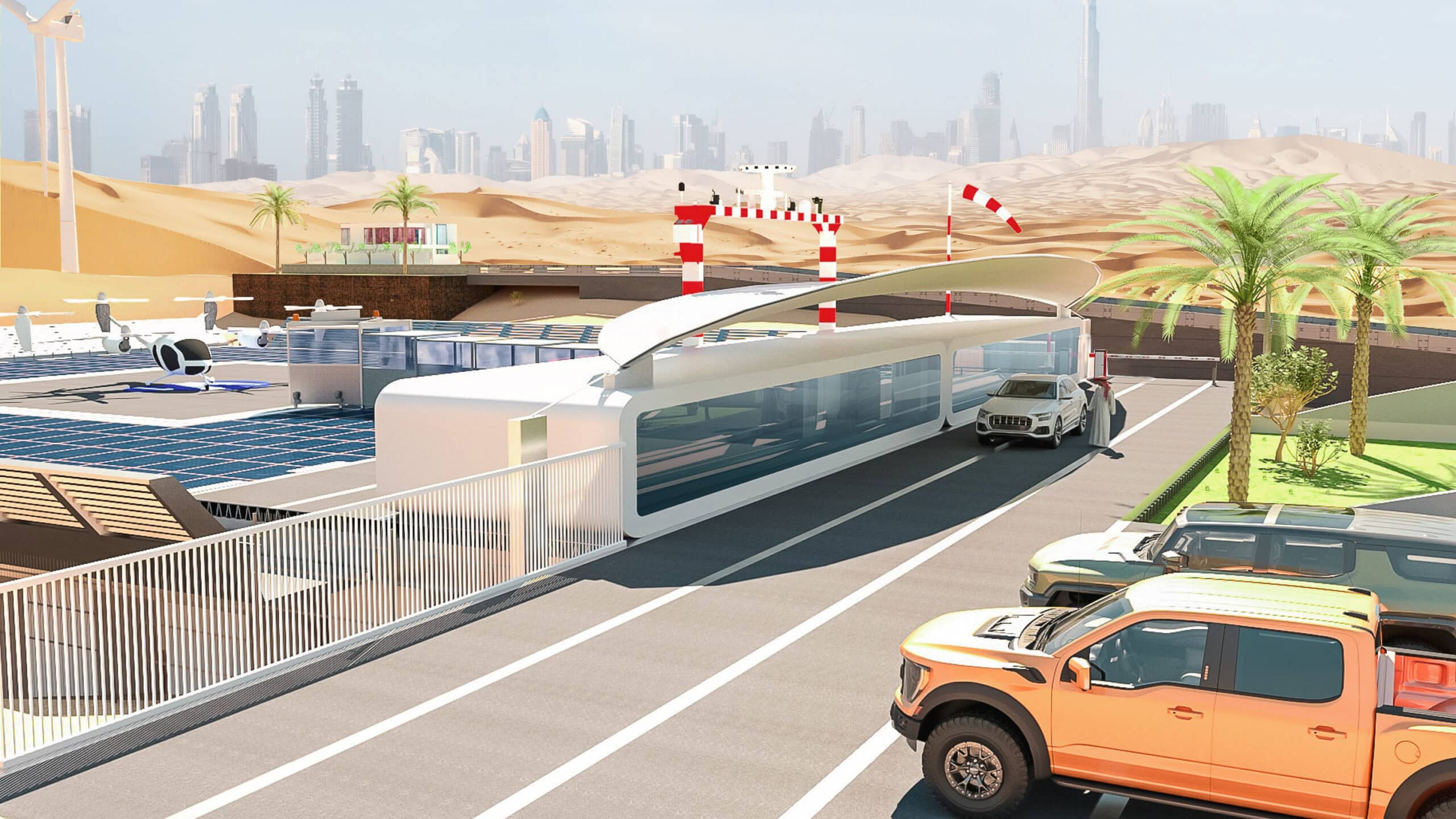
Instead of overbuilding, imagine inexpensivevertiports —modular, prefabricated “speed gates” that connect directly to existing airport terminals, heliports, or multimodal hubs. These compact units bring the “airport” to the people, allowing travelers to remain on the airside—or more accurately, the mobile side—without repeating the costly and time-consuming security process.
Each mini-vertiport acts as a node in a larger network, not a standalone luxury facility. With automated safety and security protocols, self-sufficient power, and smart digital integration, they can be deployed quickly, relocated when needed, and scaled to match real demand.
This is Mobility as a Service (MaaS)—not architecture as a statement. The infrastructure becomes adaptive, intelligent, and affordable, aligning perfectly with the lightweight, electric aircraft it serves and passenger hassle free travel expectation.
Mobility as a Service (MaaS): The True Disruptor
True disruption in transportation does not come from design extravagance; it comes from efficiency, integration, and access. MaaS is about connecting multiple modes—air, ground, and digital—into one seamless passenger experience.
By designing mini-vertiports as part of a networked system, we can:
- Maintain continuous passenger flow without re-screening or customs bottlenecks.
- Operate on both airside and landside, adapting to site constraints.
- Deploy modular “kits of parts” that can evolve from temporary to permanent installations, can be quickly deployed and scale easily.
- Reduce costs to under $2 million for a functional, compliant vertistop, rather than $10–$20 million monuments to inefficiency.
The goal is not to build one “perfect” vertiport, but to build many smart ones—each serving as a node in a flexible, scalable ecosystem network.
Investing in Scalability, Not Symbolism
Governments and investors should recognize that AAM is at a stage similar to early aviation or the dawn of the internet. The winners will not be those who built the biggest terminals or the flashiest renderings, but those who built infrastructure that can grow, adapt, and deliver value early.
Just as mobile phones replaced fixed lines, mobile vertiports will outpace fixed mega-structures. They lower entry barriers, minimize risk, and allow for data-driven expansion based on real passenger expectations, not speculative design ambition.
This is responsible innovation—an architecture of efficiency, not excess.
Conclusion: Designing for People, Not Prestige
Advanced Air Mobility gives us a rare opportunity to rethink how we move. It’s not just a new aircraft; it’s a new ecosystem—one that can reconnect people, reduce congestion, and reimagine accessibility. But that vision will fail if we repeat the old mistakes of overbuilding and overspending.
The real opportunity is to design for people, not for the sake of architectural vanity. To create modular, affordable, human-centric Vertiports that can deploy wherever demand exists close of passenger destination— at intermodal node, , in parking lots, or beside airport and train station terminals—forming a living network of mobility.
We can make this revolution affordable, safe, and scalable.
If we design wisely, we won’t just fly differently—we’ll live differently